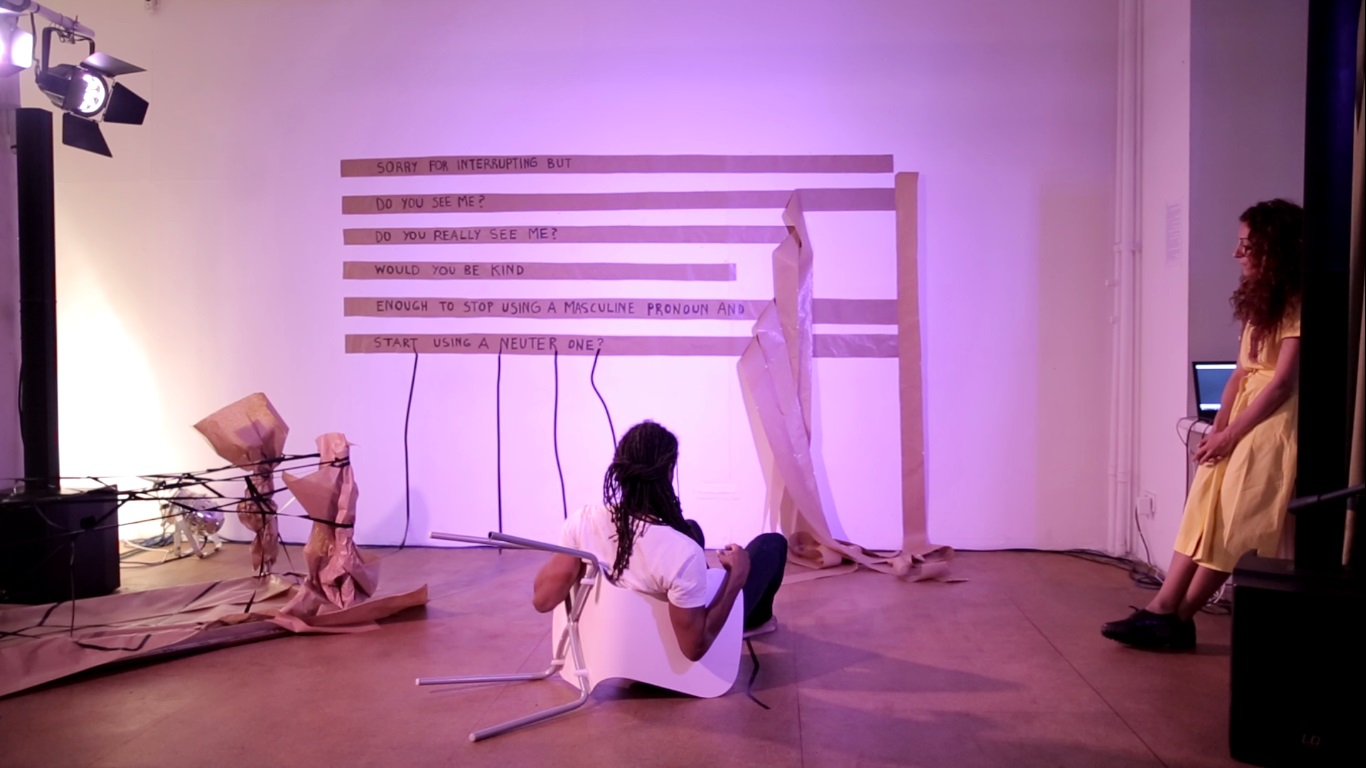
We’re back! And we too can hardly believe that it’s already been a fall and a spring of workshops and writing! But all these poems have been composed, essays envisioned, and fiction imagined. Time must have passed! Join us and the rest of The Reader Berlin community to hear what everyone’s been working on this past year—and to celebrate the summer’s advent. Our writers in Berlin have been penning personal essays and memoirs, spinning out speculative flash fiction, writing poetry, and polishing short stories for submission. Stop by for a listen.
Tutor and writer Sanders Isaac Bernstein will moderate the evening of readings.
Wie sehen das Arbeiten, die Erfahrungen und Realitäten von Autor*innen aus, die aufgrund von Krieg oder politischer Repression ihre Heimatländer verlassen mussten und nun in Berlin bzw. Deutschland leben? In regelmäßig stattfindenden Abendveranstaltungen der Reihe Literaturen im Exil präsentieren jeweils zwei Autor:innen unterschiedlicher Herkunft ihre Texte und tauschen sich über ihre Exil-Erfahrungen sowie über Chancen und Herausforderungen in der (deutschen) Literaturszene aus.
Im zweiten Teil der Reihe begegnen sich die burmesische Schriftstellerin und Menschenrechtsaktivistin Ma Thida aus Miramar und der ägyptisch-sudanesische Comiczeichner und politische Karikaturist Mohamed Anwar. Moderiert wird der Abend von Per Brandt (Goethe-Institut).
Im Fokus stehen die Vermittlung sowie Auseinandersetzung mit künstlerischen Positionen und Werken der Schriftsteller*innen. Darüber hinaus werden auch strukturelle Fragen diskutiert, wie die Anknüpfung an literarische bzw. künstlerische Szenen, Sprach- und Übersetzungsherausforderungen oder die Auseinandersetzung von Identität und künstlerischem Schaffen in einer neuen Umgebung.
Gespräch mit Yvonne Büdenhölzer und Simone Scharbert
In der zweiten Ausgabe der Reihe “Von der Seitenbühne – Sprechen über (Um-)Brüche im Literatur und Theaterbetrieb” laden Malin Kraus und Patricia Stövesand Yvonne Büdenhölzer, Verlagsleiterin Suhrkamp Theater, und Autorin Simone Scharbert ein. Gemeinsam sprechen sie über Brüche und Leerstellen in Lebensbiografien und deren Abbildung auf Bühnen. Simone Scharberts Prosawerk „Rosa in Grau“, 2022 in der Edition Azur erschienen, dient als Ausgangspunkt, um über die Darstellung psychisch erkrankter Frauen zu sprechen. Zusammen mit der Expertise Büdenhölzers, die sich neben ihrer verlegerischen Tätigkeit auch kulturpolitisch engagiert und z.B. die Frauenquote beim Berliner Theatertreffen eingeführt hat, machen die Vier einen Streifzug durch die Literatur- und Theaterlandschaft bis in unsere Gegenwart hinein.
Wenn Frauen obdachlos werden, haben sie in der Regel schon ein hartes
Leben hinter sich, Gewalt und sexuellen Missbrauch in ihren Familien und Partnerschaften erlebt, wurden ausgebeutet, betrogen oder zur Sexarbeit gezwungen. Ohne feste Bleibe gerät ihr Leben nun vollkommen aus den Fugen.
In diesem Buch gibt Angelika Sinn acht wohnungslosen Frauen eine Stimme, macht deren Erlebnisse und Erfahrungen sichtbar und nachvollziehbar, sodass Leser:innen tief in die Lebenswelt der in Not geratenen Frauen eintauchen können.
Das Schreiben von Hannah K Bründl und Maë Schwinghammer erkundet Spielräume. Spielräume zwischen Gattungsgrenzen, zwischen Sprachkörper und Körperfindung, zwischen Gemeinschaft und Isolation, zwischen Mythos und Wahrheit, zwischen Punk und Zärtlichkeit.
Die beiden lesen aus ihren Debütbänden und unveröffentlichen, neuen Texten.
Romanpräsentation mit Gespräch Moderation: Angela Schneider-Bodien
(c) privat
Najat Abed Alsamad erzählt in ihrem Roman »Kein Wasser stillt ihren Durst« (Edition Faust) vom Leben der drusischen Gesellschaft in der südsyrischen Provinz und gleichnamigen Stadt Suwaida. Aus der Perspektive einer Frau, die sich gegen die gesellschaftlichen Traditionen auflehnt und dafür zur Strafe in die Kellerkammer ihres Elternhauses gesperrt wird, berichtet die Autorin über Bräuche, Traditionen und Mythen der Drusen. „Najat Abed Alsamad: „Kein Wasser stillt ihren Durst“ – Romanpräsentation mit Gespräch“ weiterlesen
Talks with Hassan Ait-El-Ouali and Saleh Chaoui & music by Quasim Kzar
The „Ibn Rushd Young“ series provides a platform for young researchers,
intellectuals, and artists to share and discuss their current projects with an audience of like-minded peers. With this unique format we are opening up an alternative space outside the confines of traditional academia— one that’s non-hierarchical and embraces interdisciplinary dialogue on topics, issues, and projects holding significance for the Arab World.
In our upcoming event, we’re excited to host two sessions delving into the exploration of gender, religion, and social norms in literature.
The DEAD LADIES SHOW is a series of entertaining and inspiring presentations on women who achieved amazing things against all odds. Each show hosts passionate cheerleaders of too-oft forgotten women, inviting its loyal audience into a sexy séance (of sorts) celebrating these impressive icons, turbulent lives, and deathless legacies.
It’s us again! Back to our three-talk format but only in English again, unfortunately, due to our continuing funding woes. We’re treating you to talks by your beloved co-hosts Katy Derbyshire and Florian Duijsens, plus the curator, writer and film producer Rachel Pronger. Learn all about three impressive women who faced tough times, pushed boundaries, and gave the world lasting treasures. The aim of the show is to raise money for more podcasts, so we’ve adjusted the non-reduced price to €10, but reduced tickets still cost €4. Doors open 7.30 pm – come on time to get a good seat!
Lesung und Performance mit Jon Savkin, Anna Hetzer, Biba Nass Oskar und Ela Beysun Moderation: Dana Cermane
(c) Urs Mader
Wie sieht eine queere Sprache aus? Und wie verändern sich die Begriffe queerer Lebensrealitäten zwischen Tauben und hörenden Individuen? Wie bilden sich neue Begriffe und wie bilden sich neue Gebärden für neue Begriffe?
Nach verschiedenen Kooperationen in den letzten Jahren bringt die Literaturinitiative handverlesen gemeinsam mit der Lettrétage wieder Taube und hörende Künstler*innen zusammen, um gemeinsam an der Sprache zu arbeiten, sich gegenseitig zu übersetzen und neue Formen des Ausdrucks zu finden. In einem intensiven Produktionsworkshop haben zwei Taube und zwei hörende queere Künstler*innen das Format des Glossars als Ausgangspunkt eines Prozesses genommen, in dem sie sich Fragen nach der Herkunft von Begriffen, ihrer Deutungsmacht und ihrem Eigenleben gestellt haben.
Lesung und Performance mit Jon Savkin, Anna Hetzer, Biba Nass Oskar und Ela Beysun Moderation: Dana Cermane
(c) Urs Mader
Wie sieht eine queere Sprache aus? Und wie verändern sich die Begriffe queerer Lebensrealitäten zwischen Tauben und hörenden Individuen? Wie bilden sich neue Begriffe und wie bilden sich neue Gebärden für neue Begriffe?
Nach verschiedenen Kooperationen in den letzten Jahren bringt die Literaturinitiative handverlesen gemeinsam mit der Lettrétage wieder Taube und hörende Künstler*innen zusammen, um gemeinsam an der Sprache zu arbeiten, sich gegenseitig zu übersetzen und neue Formen des Ausdrucks zu finden. In einem intensiven Produktionsworkshop haben zwei Taube und zwei hörende queere Künstler*innen das Format des Glossars als Ausgangspunkt eines Prozesses genommen, in dem sie sich Fragen nach der Herkunft von Begriffen, ihrer Deutungsmacht und ihrem Eigenleben gestellt haben.