FLINTA* KULTUR SALON #2


The FLINTA* Kultur Salon reclaims and rethinks Berlin’s tradition of feminist salons as radical spaces for encounter, resistance, and collective growth. In four interdisciplinary and intersectional events in 2026, the series centers the voices and works of FLINTA* authors, poetry performers, actors, playwrights, and musicians with migration backgrounds who live in Berlin. Through interdisciplinary, cross-genre artistic practices rooted in word and language, they explore themes such as identity, uprooting, autonomy, and solidarity.
Historically, Berlin salons were spaces for intellectual and cultural exchange outside rigid social and political structures. Led by salonnières —mostly Jewish women— they brought together artists, writers, and thinkers often excluded elsewhere, offering a home for the exiled and the shunned. Yet, these spaces remained largely elite, inaccessible to working-class people, migrants, queer and trans individuals, and those lacking social or educational capital.
This event series fundamentally expands the legacy of historical salons by creating access and participation for artists and audiences affected by intersectional disadvantages and discrimination. It continues the intent of the salonnières, not by replicating their spaces, but by realigning their purpose, to establish conditions in which collective rethinking and joint action become possible, preserving Berlin’s role as a vibrant, accessible European cultural hub that hosts and supports artists from both Germany and abroad.
This is particularly crucial at a time when these conditions, affordable living and working spaces, artistic freedom, equal participation, gender justice, and more, are increasingly threatened or politicized.
FLINTA* KULTURSALON #2
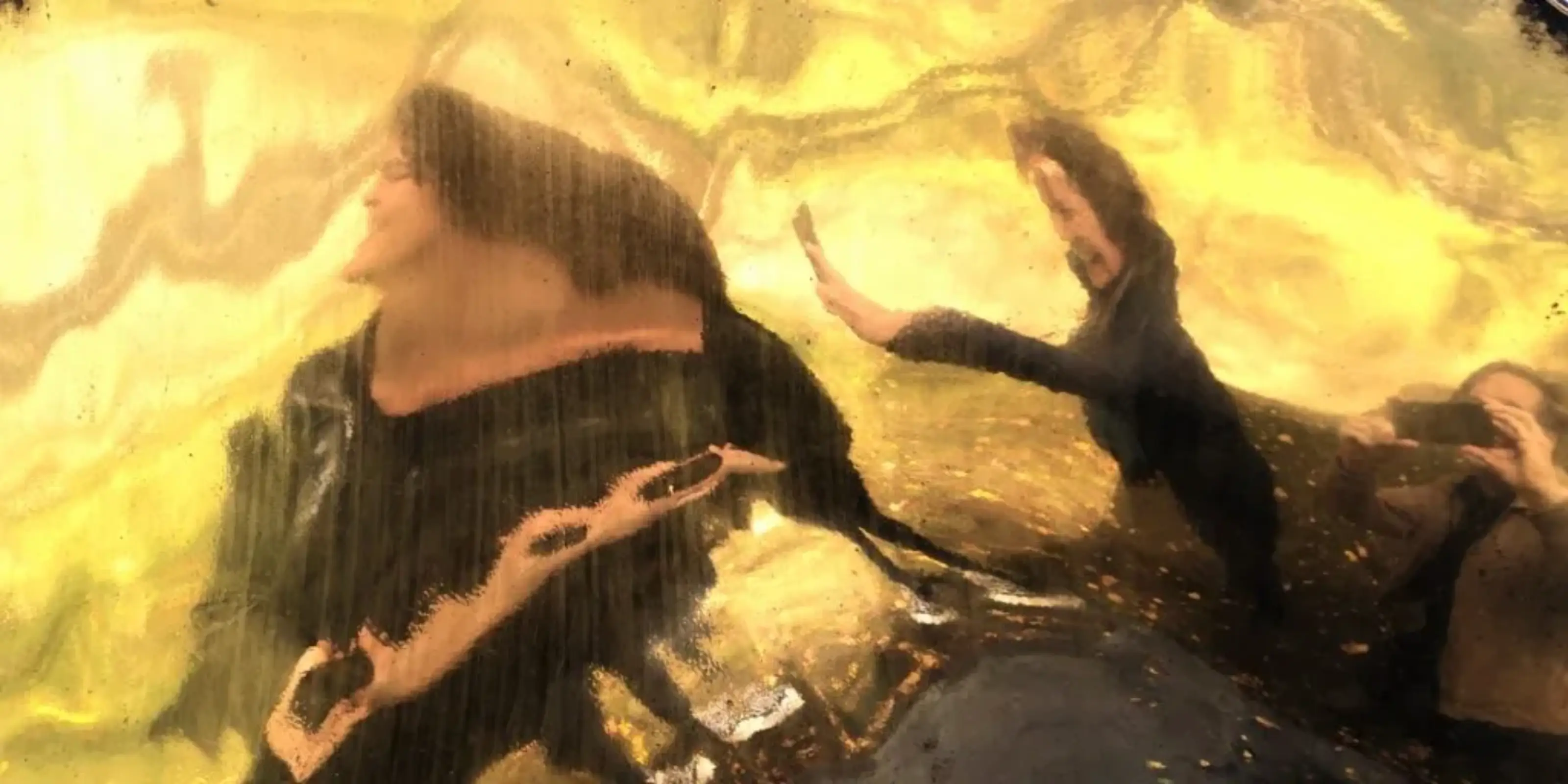
This event focuses on transgenerational trauma, mental health, and the search for belonging from queer-feminist and post-migrant perspectives. Poetic experiments and hybrid formats (text, image, sound, performance) are used to explore alternative narratives and altered states of consciousness through rural imaginaries, multispecies relationships, and anthroposophy. Key questions include: How do trauma, body memory, and alienation shape poetic voice and form? How can language, sound, and image convey unspeakable or non-linear experiences as therapeutic interventions? What alliances and solidarities emerge across species, borders, and psychogeographies?
FLINTA* KULTURSALON is a project by FLINTA* Literatur, Berlin’s platform for migrant and exiled womxn artists, in cooperation with Lettrétage, funded by the Senatsverwaltung für Kultur und Gesellschaftlichen Zusammenhalt, recommended by The Reader Berlin and presented by tip Berlin.
Contact: kontakt@flintaliteratur.de
Meri Koivisto
For many years Meri Koivisto (Finland) has lived and worked in Germany. Her career includes numerous roles in film and television productions in the German-speaking world, including leading and supporting roles in series such as Schloss Einstein, Tatort, Großstadtrevier, and SOKO Wismar. Alongside her work in front of the camera, she is also active on theater stages. Her presence is characterized by versatility, Nordic clarity, and a subtle sense of humor.
Victoria Hohmann

Victoria Hohmann (she/her. preferably without pronoun) is a German author, text artist and as a mother performing the daily challenge between art and care-work. For her writing means activism. As text artist, she works at the interface text and image. 2024 she founded Offbeat-Publishing for experimental texts. She sees Publishing as an artistic discipline. Her long poems “Potenz.” and the newly republished “Der Frau” (2025) have appeared there. Her debut novel “Lautgemalte Nacht” was published in April 2026 by Literaturverlag Schruf & Stipetic. She lives in Berlin.
Ana Rocío Jouli

Ana Rocío Jouli (Argentina) is an Argentine poet, performer, researcher, and curator. In her work, she explores the possibilities of poetic language in various formats, such as poetry film and lecture performance, which question the boundaries between art and science. She is currently a postdoctoral researcher at the Cluster of Excellence “Temporal Communities” at Freie Universität Berlin, where she coordinates the transdisciplinary project Activation Lab: Rewriting the Archive. The lab investigates how archives can be re-read and activated through expanded writing practices and artistic approaches.
Julieta Rollhaiser (JURO)

JURO (Argentina) studied graphic design and photography at the Escuela de Artes Aplicadas Lino Enea Spilimbergo of the Provincial University of Córdoba. In her current work she focuses on children’s books and graphic novels, where she combines fantastical elements with personal narratives about migration, belonging, and imagined worlds. She lives in Berlin.
IEVA & Cecilia Pez

IEVA is a Latvian artist who works interdisciplinarily across artistic, cultural, as well as social and therapeutic contexts. With the support of the Max von Sydow Scholarship, she studied film in Denmark and began her career as a filmmaker. In 2005 she came to Berlin as a participant in the Berlinale Talent Campus, where she continued developing her artistic work. The city’s creative environment inspired her to integrate acting, writing, painting, dance, and singing into her practice.
Cecilia Pez (Chile) is a multidisciplinary artist and performer from Chile with a background in architecture and self-taught music. She explores art through sound and sculpture. With a DAAD scholarship, she completed a Master of Arts in Stage and Spatial Design. Cecilia has participated as a performer in various projects, including the “Copula Series” at Hacklab CTM Festival. She currently works with Ute Wassermann in the “Voice X” ensemble and collaborates with Edgardo Rudnitzky on the project “Topography of Sounds.” Since 2016 she has been active with her music project Badecima.