FLINTA* KULTUR SALON #1
.webp)

The FLINTA* Kultur Salon reclaims and rethinks Berlin’s tradition of feminist salons as radical spaces for encounter, resistance, and collective growth. In four interdisciplinary and intersectional events in 2026, the series centers the voices and works of FLINTA* authors, poetry performers, actors, playwrights, and musicians with migration backgrounds who live in Berlin. Through interdisciplinary, cross-genre artistic practices rooted in word and language, they explore themes such as identity, uprooting, autonomy, and solidarity.
Historically, Berlin salons were spaces for intellectual and cultural exchange outside rigid social and political structures. Led by salonnières —mostly Jewish women— they brought together artists, writers, and thinkers often excluded elsewhere, offering a home for the exiled and the shunned. Yet, these spaces remained largely elite, inaccessible to working-class people, migrants, queer and trans individuals, and those lacking social or educational capital.
This event series fundamentally expands the legacy of historical salons by creating access and participation for artists and audiences affected by intersectional disadvantages and discrimination. It continues the intent of the salonnières, not by replicating their spaces, but by realigning their purpose, to establish conditions in which collective rethinking and joint action become possible, preserving Berlin’s role as a vibrant, accessible European cultural hub that hosts and supports artists from both Germany and abroad.
This is particularly crucial at a time when these conditions, affordable living and working spaces, artistic freedom, equal participation, gender justice, and more, are increasingly threatened or politicized.
FLINTA* KULTURSALON #1
Focus and themes: This evening explores the postfeminist female gaze as a site of friction, demonstrating how gendered ways of seeing can be dissolved, redirected, or used as resistance through artistic expression. All contributions engage with questions of embodiment, voice, and visibility across genres and disciplines: from performance and sound to visual narratives and hybrid text forms. What becomes visible, or even speakable, through a female or queer gaze? Can poetic or performative forms disrupt the hierarchy between subject and object, observer and observed? How are desire, vulnerability, or eroticism renegotiated when reclaimed by those who have historically been objectified?
Program:
Author and filmmaker Marjan Sareh (Iran) presents a poetic-linguistic work that blends surreal realism with Persian poetry, exploring the inner lives of women under systems they did not create.
Alevi-Turkish poet Zeynep Cekinmez proposes a poetic intervention focusing on the postmigrant feeling of being in-between and Julia Kristeva’s concept of the semiotic chora.
Swiss-based performer and director Elsa Cailletaud and flutist Flora Karetka present Anti-blasons, a feminist and queer reinterpretation of 16th-century body-focused poetry fragments, developed as a site-specific performance.
Digital storyteller and musician Ruoming Zhao (China) performs Silence Ball: Digital Mother, a speculative-feminist sci-fi dream-pop performance based on her bilingual novel.
Moderation: Ioana Cristina Casapu
FLINTA* KULTURSALON is a project by FLINTA* Literatur, Berlin’s platform for migrant and exiled womxn artists, in cooperation with Lettrétage, funded by the Senatsverwaltung für Kultur und Gesellschaftlichen Zusammenhalt, recommended by The Reader Berlin and presented by tip Berlin.
Contact: kontakt@flintaliteratur.de
Marjan Sareh
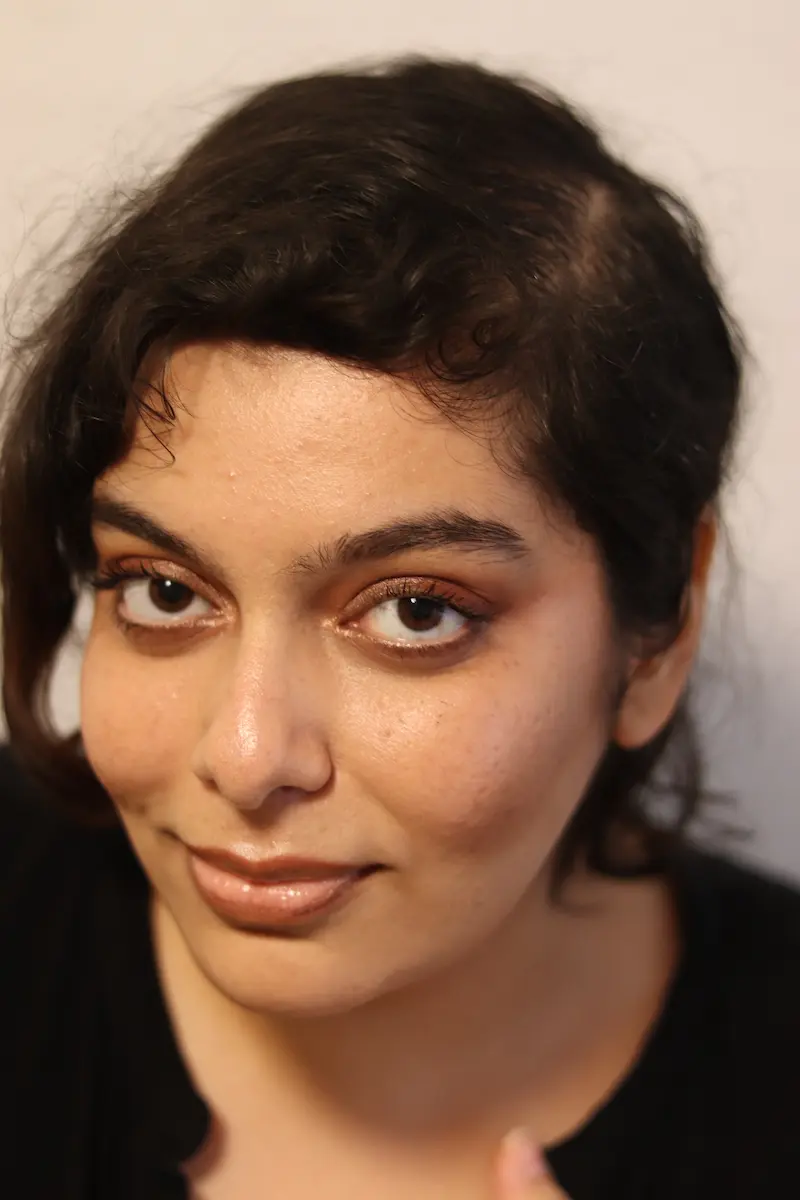
Marjan Sareh (Iran) is a transdisciplinary artist whose practice lies at the intersection of fiction, mythology, and cultural memory. Her work focuses on questions of migrant identity, female perspective, and transcultural narration. She trained at the renowned Karnameh Art Institute in Tehran, where she studied under Majid Barzegar and Shahram Mokri, among others. There, she deepened her knowledge of screenwriting, directing, and visual storytelling. Since moving to Germany, Sareh’s artistic practice has explored new forms of collective memory and belonging. She currently lives in Berlin and is pursuing a Master’s degree in Heritage Studies.
Elsa Cailletaud
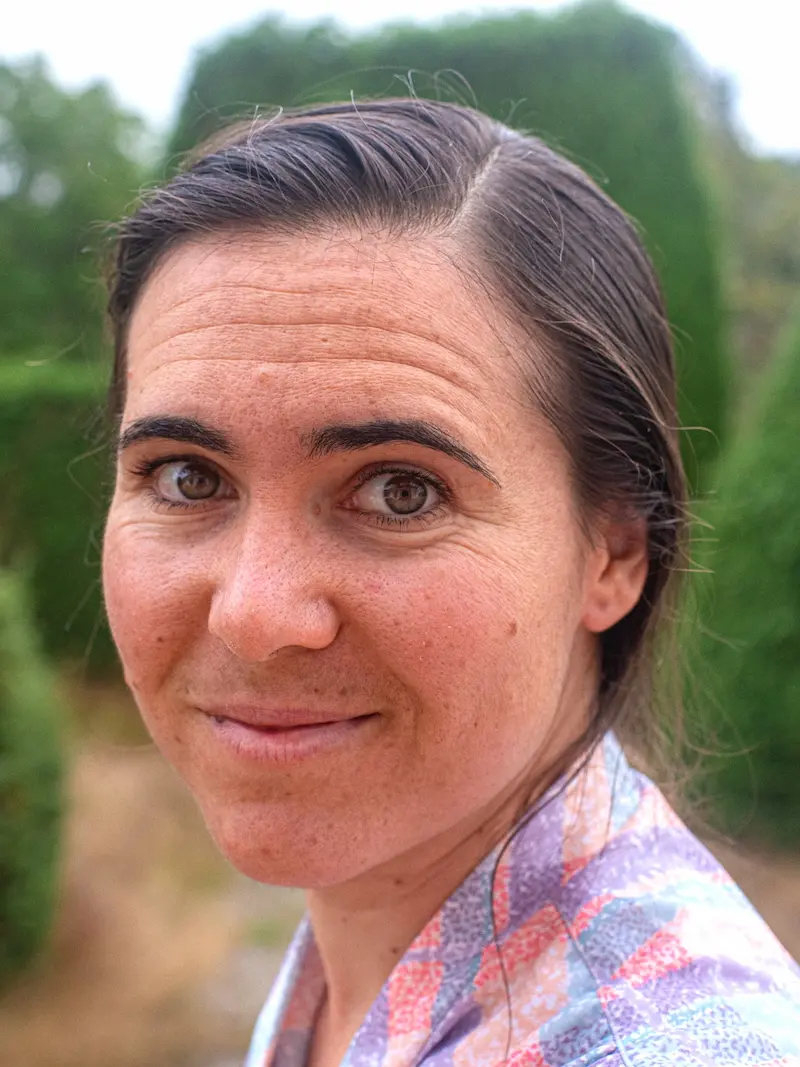
Elsa Cailletaud (France) is a multidisciplinary artist focusing on performing arts. Their work explores the interactions between body and space and engages with both individual perception and collective dynamics. They create performances, photography, installations, texts, and sound works. After studying translation at the University of Geneva, they received a scholarship to study dramaturgy and directing at Smith College (USA), where they staged two of their short plays at local festivals. Their current work explores bodily perception through hybrid forms that combine text and scenic experimentation. As part of their artistic projects, they will participate in a residency program in Berlin in 2026.
Flora Karetka

Flora Karetka (Hungary) is a graduate of the Lucerne University of Applied Sciences and Arts – Music. As an artist with a wide-ranging interest in music from the Baroque period to the present, she is active in music education as well as in various chamber music ensembles. She is currently pursuing a Master’s degree in Contemporary Arts Practice at the Bern University of the Arts, where she explores new sonic worlds and interdisciplinary practices. She will work in Berlin in 2026 as part of her artistic projects.
Ruoming Zhao

Ruoming Zhao (China) is a Berlin-based multidisciplinary artist whose work focuses on the transcendence of meaning within states of indeterminacy and silence. She examines the relationships between femininity, materiality, and social structure through imagined representations of everyday life, love, death, memory, and vulnerability within an intertwined reality. In 2025 she was selected for the “Conditions – Alternative Art Education Program.”
Zeynep Cekinmez

Zeynep Cekinmez (Türkiye) is an Alevi-Turkish poet. She is pursuing a Master’s degree in English Studies at the Free University of Berlin. Her MA thesis focuses on “Refugee Motherhood” in the poetry of Ocean Vuong. Her poems address sexualized violence, migration, intergenerational trauma, panic and anxiety disorders, solidarity, and friendship.